Gone are the days when users were paying hefty fees to mobile service providers to send text messages. Users today require unlimited free texts.
It is a popular belief that during the 12th century, the embodiment of renunciation, Shri Allama Prabhu, left Kalyana to travel the world. During his journey, he established this Matha (monastery) at Chittaragi and handed over its authority to a Shivayogi named Shri Rudradeva (Shivayogi).
Shri Rudra Shivayogi lived as a great ascetic and a practitioner of deep penance. He was revered as “Kamadhenu” (divine cow that grants wishes) for the poor of this region, fulfilling their prayers. Even as he aged, his spiritual aura remained youthful and vibrant. He is credited with performing hundreds of miracles.
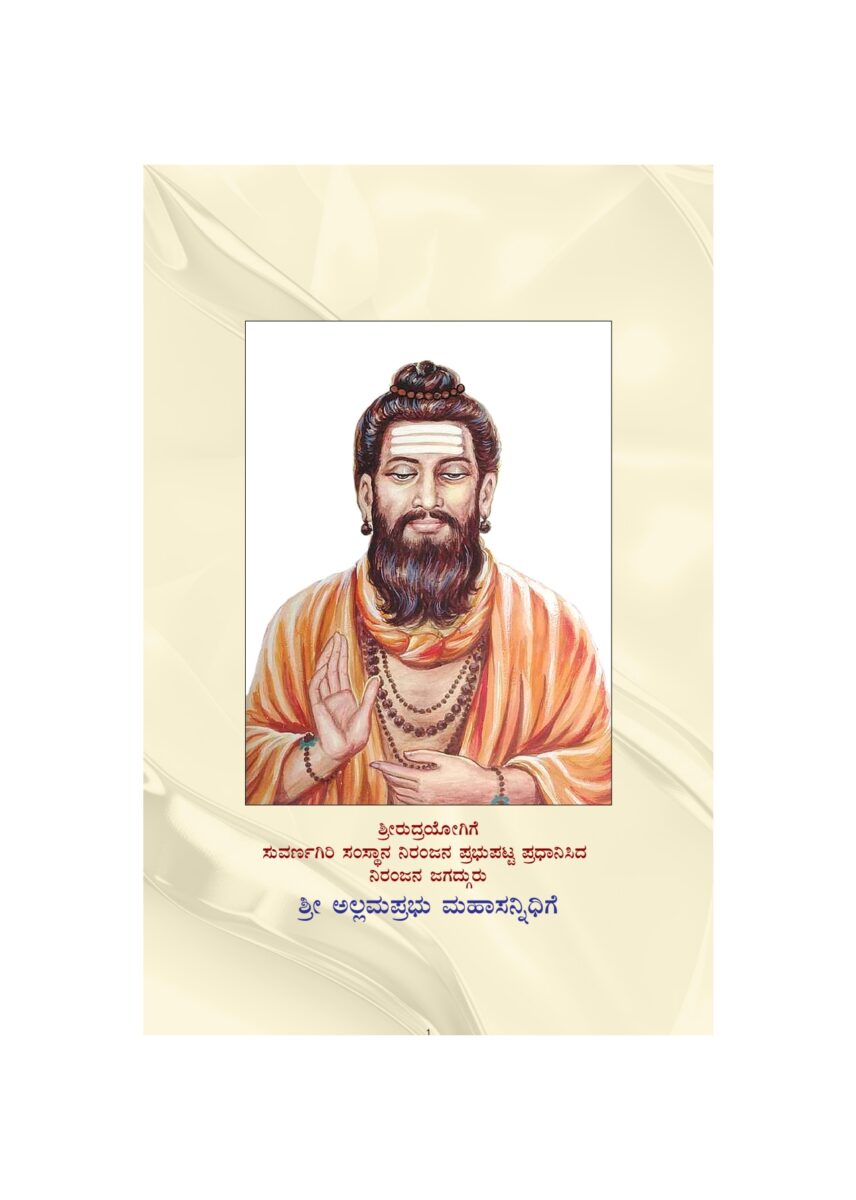
While the Matha and the town were being constructed, the devotees working on the project grew weary. Shri Guru Rudra Shivayogi pointed toward a nearby hill and said: "Go to the hill; the wealth for your wages is right there. Take it." Following the ascetic’s command, the devotees went and dug into the hill. To their amazement, they found gold! The people praised him, saying, "Our Guru Rudrayogi is a divine power who created gold out of a hill of stone and mud to pay our wages." Because of this divine play (Leela), the hill previously known by names like Sirigudda, Bangarada Giri, or Lakshmi Gudda—came to be known as Kanakagiri (The Hill of Gold).
Shri Rudra Shivayogi, who turned the hill into gold, is honored as Kanaka Guru and Kanaka Muni. The town he built is Kanakagiri, and the throne of the Sunya Peetha he ascended is titled the "Suvarnagiri Samsthana Peetha." Historical records suggest the area was known as 'Suvarnagiri' even in ancient times. Today, the Samsthana boasts a prestigious lineage of 28 generations of Gurus. The main shrine (Samadhi Gadduge) of the great saint is a powerful spiritual center, and the influence of this Peetha extends to over 40 branch Mathas and sub- centers.
Among the 101 Viraktas (ascetics) who lived during the 13th-century reign of Proudha
Devaraya, "Kallu Mathada Rudradeva" belonged to this Shri Matha. The historical text
Shivatattva Ratnakara provides evidence for this. Furthermore, among the 701 Viraktas during
the time of Shri Siddhalinga Yati of Yediyur, the leaders of this Shri Matha were present. Shri
Siddhalinga Yati mentions the authorities of the Shri Matha in his writings. Since that era, the
Matha has been actively involved in its own unique religious, social, cultural, and educational
initiatives. While precise information regarding the 24 preceding seers of the Matha is not
available, their Gaddiges (shrines/tombs) can still be found in various branch Mathas.
In the history of the Shri Matha, detailed information is available from the 25th Pontiff to the recent seers. Since then, the Matha has grown into a highly influential institution in this region.
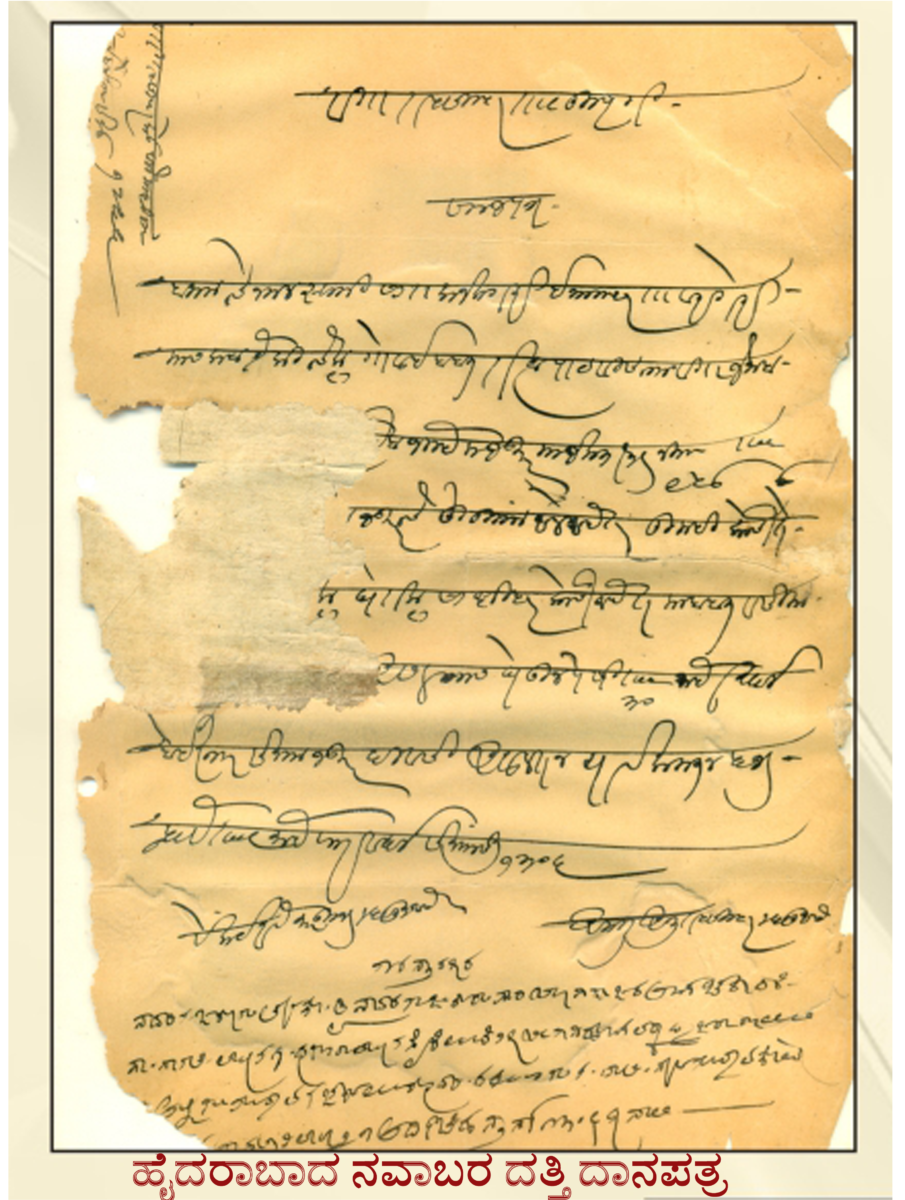
Historical records show that the Nizam of Hyderabad, impressed by the religious principles and
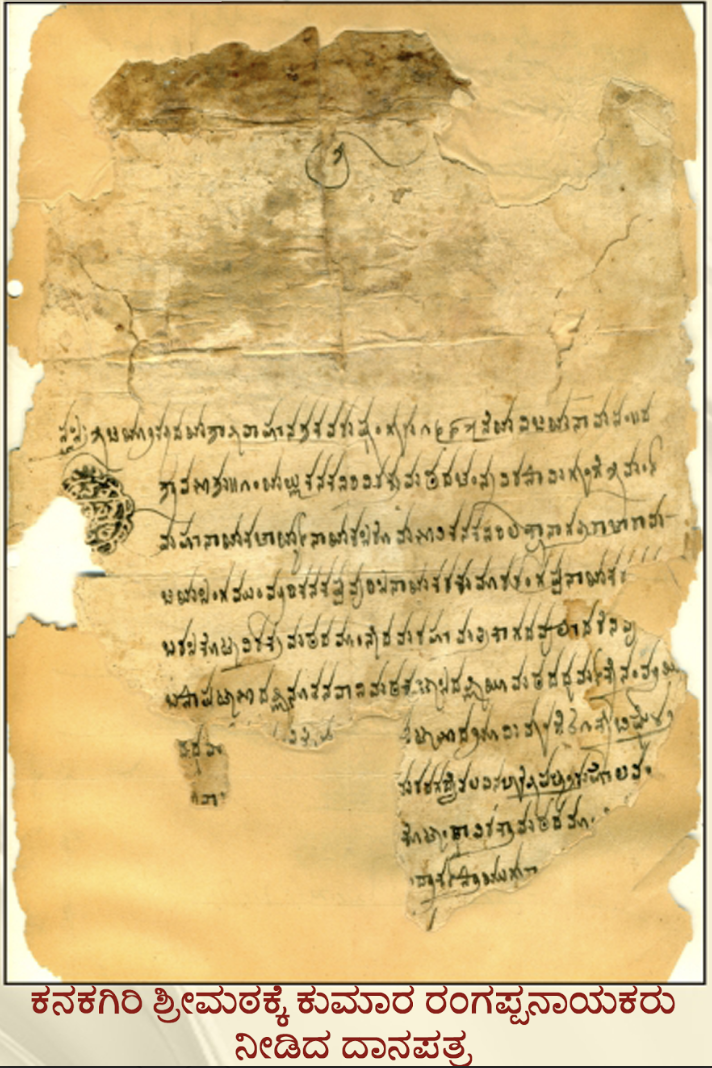
the work of the 13th Pontiff, donated seven villages as a gift (Inam) to the Matha. Additionally, the Shri Matha served as the “Guru Matha” (spiritual seat) for the Guijari dynasty of Kanakagiri,who were feudatory kings under the Vijayanagara Empire. As a testament to this relationship, silver staffs and Chamaras (ceremonial whisks) are still preserved at the Matha.
The kings even constructed a stone Matha inside the fort and established a tradition where the Kanakachala Chariot (Ratha) would travel up to the Shri Matha to receive Shankara Pooje (consecrated offerings) before proceeding. This tradition has been preserved and continues to be
followed with great devotion to this day.
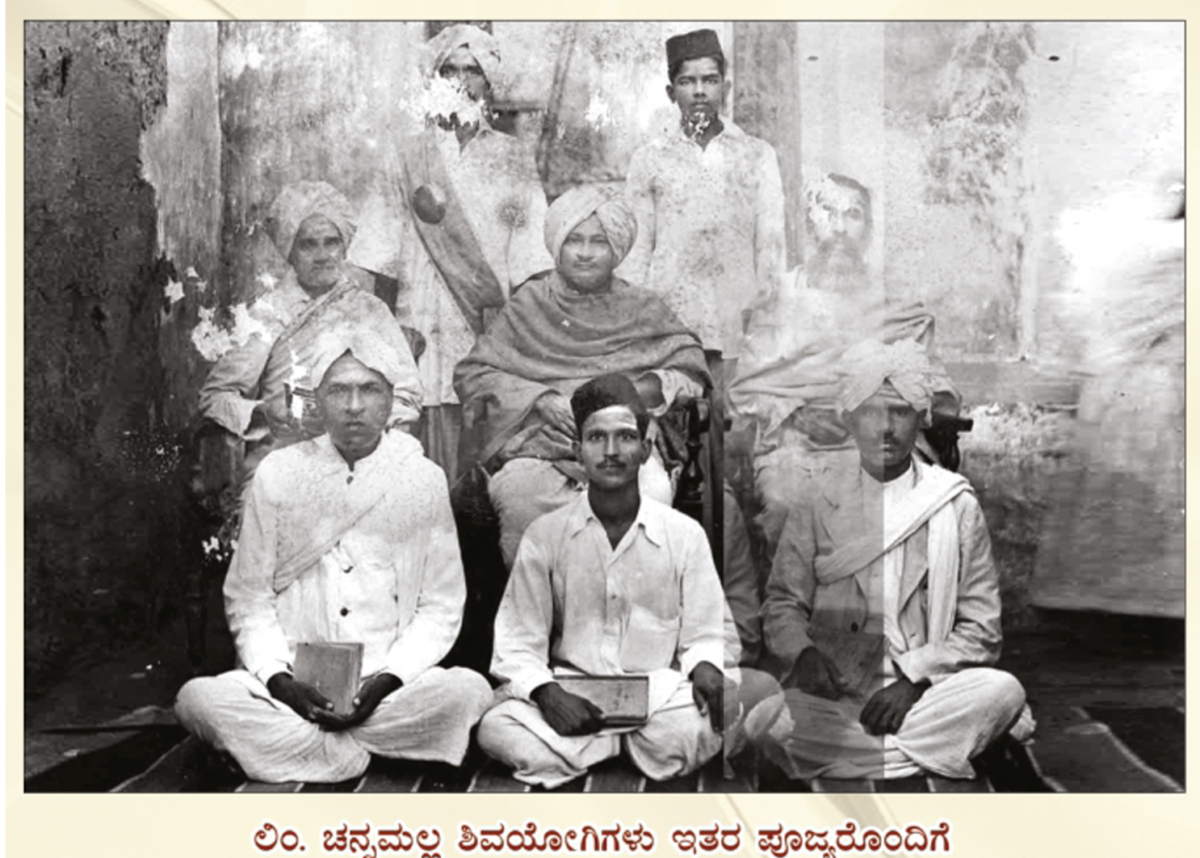
The 20th pontiff, the late Shri Ma.Ni.Pra. Chennamalla Shivayogigalu, was a profound scholar. He was a highly educated individual who had earned a "Pandit" designation. Historical records of the endowments and charities given to the Shri Matha serve as evidence that even the Nizam Kings of Hyderabad used to invite him to receive his advice and blessings. He was a sanctuary for poor children and students, providing them with financial aid and education. Furthermore, he brought Late Shri Chennabasavatata to the Matha while he was still young and educated him in the Shastras (scriptures), rituals, and traditions. He then appointed him to lead the Mathas in Kelur, Eddaladoddi, Ginivara, Raichur, and Kogi, thereby fostering their growth.
He was a visionary and a monumental figure of his era, sharing a close and affectionate bond with Shri Kumara Mahaswamigalu. During the early days of the Shivayoga Mandira, he spent some time there. After several years, he attained Lingaikya (passed away) in 1954 on the day of Margashira Bahula Saptami at the Suvarnagiri Samsthana Matha in Medikinal village, Maski Taluk, District Raichur. Since then, his memorial day (Smaranotsava) has been observed annually with great devotion
Following the passing (Lingaikya) of Shri Channamalla Shivayogi, the government took control
of the Karuvaya Shri Matha for a period of 15 years. This was due to the vast management requirements of its thousands of acres of land and hundreds of branch monasteries (Shakha Mathas). Subsequently, in 1971, Lingaikya Shri Ma. Ni. Pra. Rudramuni Mahaswamiji was appointed as the successor to the Shri Matha.
Shri Rudramuni Mahaswamiji was born on August 2, 1945, in Tonasihaala village of Kustagi Taluk, Koppal District. He was born to the virtuous couple Shri Basayya and Smt. Gundamma, belonging to the lineage of the Hiremath family. He was initially named Mahantayya.
Early Education: He completed his primary education up to the 3rd standard in Ilaala
village, Hungund Taluk, under the care of his maternal uncles, Veerabhadrayya and
Rachayya of the Dammur Hiremath.
Move to Shivayoga Mandira: At the age of 10, following the guidance of the then-pontiff
of Chittaragi Ilkal, Shri Ma. Ni. Pra. Koppada Mahanta Swamiji, he moved to the
Shivayoga Mandira.
Spiritual Training: Within the Shivayoga Mandira, he continued his studies under the
name Shankara Devaru. In the divine presence of Shri Guru Kumareshwar, he mastered
Sanskrit, the Vedas, Agamas, and Upanishads. Through rigorous practice and discipline,
he became a “Anushthana Murti” (an icon of spiritual practice).
After gaining expertise in the science of Ayurveda, and in response to the request of the devotees of the historical holy site of Kanakagiri in Koppal District, he was chosen as the successor to the Shri Suvarnagiri Samsthana Viraktamath.
He served for a few days in the presence of the then-pontiff of the Shri Annadaneeshwara Matha. On Friday, February 5, 1971 (Shaka year 1892, Sadharana Nama Samvatsara, Magha Shuddha Dashami), he was formally initiated and ordained as Shri Ma. Ni. Pra. Rudramuni Mahaswamiji of the Kanakagiri Shri Suvarnagiri Samsthana Viraktamath by Shri Annadana Mahaswamiji.
It is a well-known fact that Hyderabad-Karnataka is an economically, educationally, and socially backward region. Specifically, in the Kanakagiri area of Koppal district, the local population lives in the grip of poverty due to their dependence on rain-fed agriculture.
Recognizing that education is the only way to bring awareness to these people, the Sri Rudraswami Rural Education Society (Regd.), Kanakagiri, was established in 1981. Under this society, the Shri Shivayogi Channamalla Primary School was started in 1988, followed by the Shri Guru Rudraswami High School in 1992 in Kanakagiri.
The sapling planted by the Swamiji has now grown and is flourishing. As a true lover of education, the revered Swamiji donated land in various places to encourage learning:
In addition to these land grants, he provided financial assistance worth lakhs of rupees to many villages. Known for his immense generosity, the revered Swamiji left his earthly body on the day of Shravana Bahula Dashami in the Hindu year Tarananama Samvatsara (Shaka 1926).
Following him, on Wednesday, May 11, 2005, Shri Ma. Ni. Pra. Dr. Channamalla Mahaswamigalu took charge as the 28th Pontiff (Peethadhipati).
this region through various innovative and intellectual programs.
The Shri Rudraswamy Student Free Hostel (Reg.), Kanakagiri, which began in 1968-69, had fallen into decline due to mismanagement by others. His Holiness took over the institution, revitalized it, and constructed a new building at the Matha costing crores of rupees, providing free residential education to 200 students. Since his arrival, he has reconstructed the Kanakagiri Moola Matha (the main monastery) and built a stone structure for the Medikinala Shana Matha using teak wood…
He has commissioned the construction of a wooden chariot (Ratha) and has also built a new structure at the Kandagallu branch Matha. Development works are continuously underway in various branch Mathas, including Tavaragere, Kanagi, Somalapura, Dhadesuguru, Kengal, Mukkunda, Ravadakunda, Vanageri, and Mangaluru.
Following in the footsteps of his predecessors, His Holiness has made significant land donations: 4 acres for a Government Degree College in Mangaluru (Kukanoor Taluk), 5 acres for a 100-bed Government Hospital in Kanakagiri, and 2 acres for a Veerashaiva cemetery in Tavaragere. In 2009, he established the "Suvarnagiri Jnana Maale" in Kanakagiri, through which more than 15 literary works have been published. Furthermore, he started the Chennathirudra P.U. College in 2016, the Shri Rudraswamy Religious School in 2022, and the Suvarnagiri Public School in 2026 in Kanakagiri. Institutional buildings, the Suvarnagiri Chennathi Seminar Hall, and free student hostels have been constructed at a cost of several crore rupees.
Shri Suvarnagiri Samsthana Viraktamath, Kanakagiri
©2026, Suvarnagiri Math. All Rights Reserved